
A recent report in the Ottawa Citizen highlighted the ongoing challenges the Canadian Armed Forces face when trying to showcase their work in the High Arctic. According to the story, a September 2026 promotional media trip to Resolute Bay for Operation NANOOK-NUNAKPUT ran into significant logistical hurdles and strict limitations on civilian reporters, ultimately sparking an internal military review.
Anyone familiar with the realities of northern operations knows that getting crews into the High Arctic is never simple. Harsh weather, limited transport seats, and tough living conditions make hosting civilian media embeds a complex balancing act. Yet when those trips falter, the Canadian public misses out on seeing the vital, day-to-day work our Canadian Forces perform to protect our northern border.
Reading this, I couldn’t help but think that the military doesn’t need to reinvent the wheel to solve its Arctic storytelling dilemma. In fact, Canada already perfected the blueprint decades ago.
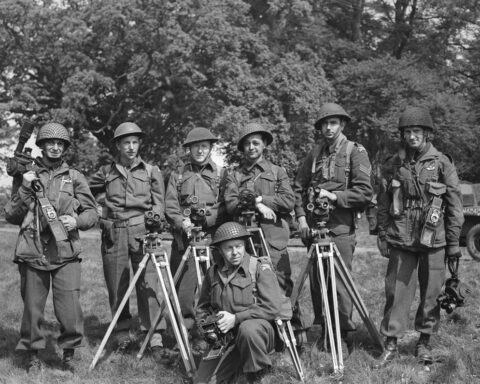
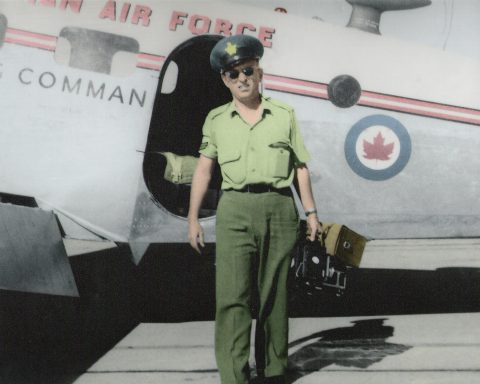
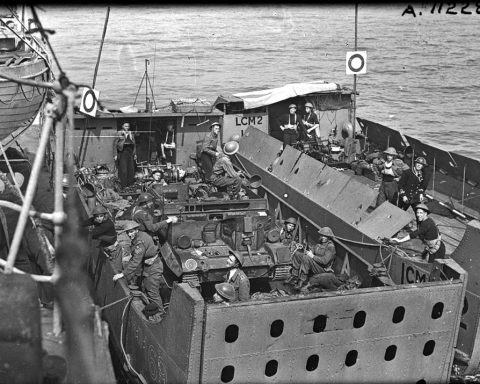
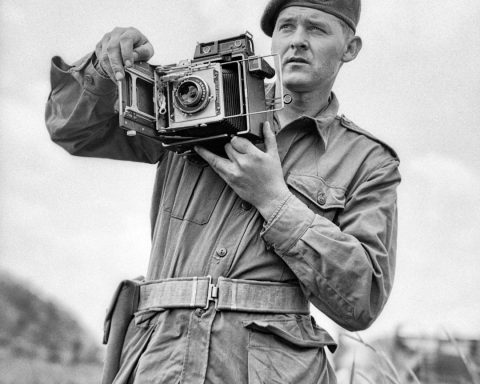
Long before modern public affairs strategies, Canada’s military repeatedly solved the exact same challenge: how to bring original, interesting stories from remote and unforgiving operational theatres back to Canadians at home. During the Second World War, the Canadian Army, Royal Canadian Air Force, and the Royal Canadian Navy each fielded their own dedicated public relations, film, and photo units. That vital work continued with combat cameramen serving alongside Canadian troops during the Korean War. Across both conflicts, their solution was straightforward and remarkably effective; they trained enlisted personnel as military photographers and sent them directly into the field alongside the troops.
Soldiers Behind the Lens
What made these tri-service WWII units and Korean War combat cameramen so effective was a simple principle: they were military personnel first, and photographers second.
Behind the scenes, an organized Public Relations headquarters structure made sure those field teams were properly supported and coordinated. At Canadian Military Headquarters (CMHQ) in London, figures like Col. W.G. Abel, serving as Deputy Director of Army Public Relations, oversaw the operational placement of military photographers, even arranging specialized training so cameramen could jump with airborne troops.
In the field, dedicated liaison officers ensured coverage reached every corner of Canada. Bilingual Public Relations Officers like Capt. Placide Labelle, who landed with the 3rd Canadian Division on D-Day and coordinated French-speaking photographers and correspondents across Sicily and Normandy, made certain that French-Canadian audiences at home saw their own troops in action.
Enlisted men and women of the WWII Film Units all went through basic military training alongside everyone else before receiving specialized instruction in either still and/or cine photography. (In many cases they had already been singled out due to their previous employment or experience in the photographic field before the war.) Because they understood military protocol, field craft, and operational security from day one, they did not require special escorts or separate logistical support. They carried their own gear, lived in the same tents, ate the same rations, and traveled on the same transports as the units they documented.
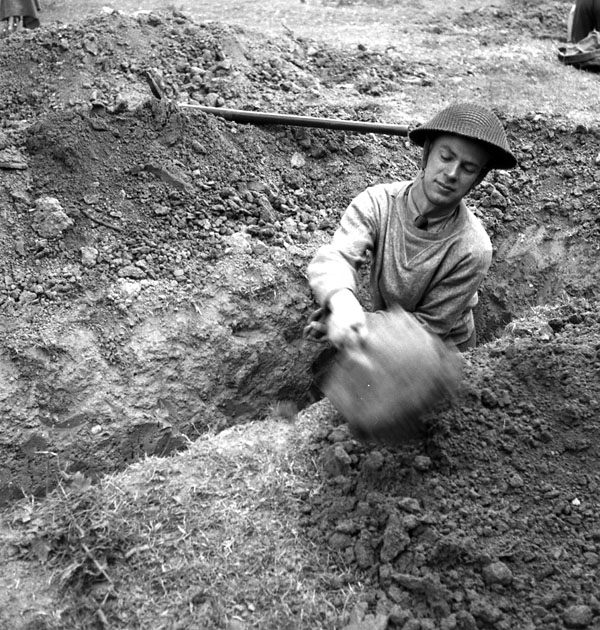
ABOVE PHOTO: Lieutenant Ken Bell of the Canadian Army Film and Photo Unit digging a slit trench in the Normandy beachhead, France, 10 June 1944. Credit: Canada. Dept. of National Defence / Library and Archives Canada / PA-131443
Restrictions on use: Nil Copyright: Expired
Whether covering front lines in Europe and Korea or remote postings across Canada’s North, these military photographers were fully integrated into the mission. They didn’t just visit a story for a brief photo opportunity; they lived it alongside the troops, capturing authentic moments without slowing down operations.
Milfoto and Combat Camera
That proud tradition lives on today through Canada’s modern military imagery technicians; a tightknit community well known to veterans and active members through groups like CAF PHOTO FAC and the Milfoto network…See also their Facebook site: https://www.facebook.com/CAFPHOTOFAC/
At the tip of that spear is Canadian Armed Forces Combat Camera. While many people assume Combat Camera operates strictly in overseas conflict zones, this select group of highly trained imagery technicians also deploys on critical domestic and sovereignty missions right here in Canada, including in the High Arctic during operations like NANOOK…
Just like their predecessors in the Second World War and Korea, today’s imagery technicians are trained to operate in extreme environments. They know how to keep cameras running in sub-zero temperatures, understand what can and cannot be shown for operational security, and seamlessly embed with patrols guarding our northern borders.
Northern Sovereignty
Independent civilian journalism plays a vital role in getting the news out to the public, and well-planned media embeds will always have value. However, as the recent challenges in Resolute Bay demonstrate, relying solely on occasional civilian media tours in the High Arctic leaves too much to chance when weather or logistics intervene.

Canada has a long, proven history of empowering its own trained soldiers, sailors, and aviators to tell the military’s story from the field. By leaning further into dedicated military public relations and imagery teams, and giving them the resources to document deployments from start to finish, the Canadian Armed Forces can ensure Canadians never miss out on seeing the men and women standing on guard in the North.
Were you a military photographer or imagery technician who worked in the High Arctic? I’d love to hear your stories and experiences in the comments below.
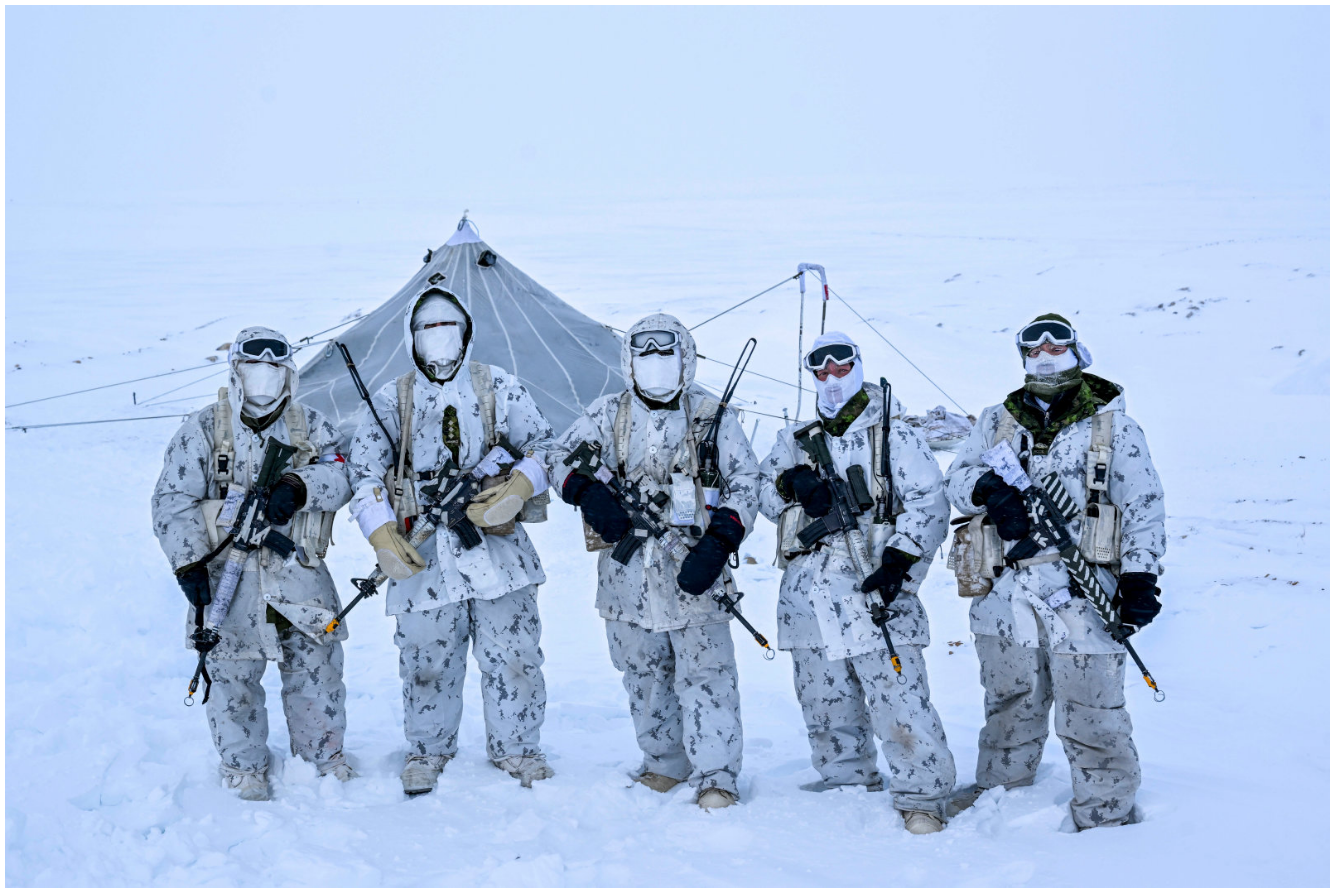
FEATURED PHOTO ABOVE: Members of 38 Canadian Brigade Group’s Arctic Response Company Group armed with C7 automatic rifles stand in front of a 10-person arctic tent during Operation NANOOK-NUNALIVUT, near Cambridge Bay, Nunavut on 19 February 2026. Photo: Master Corporal Sarah Morley, Imagery Technician, 4th Canadian Division Support Base Petawawa. https://www.combatcamera.forces.gc.ca/gallery/cc_photos/detail/?filename=20260219NKAU0041D001&assetId=1816557
© Dale Gervais NOV 2026