
By Benjamin Moogk
New research from Thomas Hogan has revealed evidence that three hundred feet of footage of the Canadians landing in Normandy likely sits unseen somewhere in a Washington DC archive. His article, "The Real Story of John Ford's Navy on D-Day" reveals that eighty-two years ago the footage was shot, developed, catalogued, and then forgotten.
Every anniversary of D-Day, Canadians see the same footage of Canadian soldiers landing on the Normandy beaches. The famous “pat on the back” from one soldier to another just before they face German bullets is an image most Canadians recognize.
The origin of that footage has been obscured by its confusion with footage taken by Canadian Sergeant Bill Grant on another section of Juno Beach, at “La Maison des Canadiens” in Bernières-sur-Mer. Images of that house from Sergeant Grant’s footage, and Lieutenant Frank Duberville’s photographs, made the house famous. It was the first liberated French house seen by Allied civilians in newspapers and newsreels after the landings.
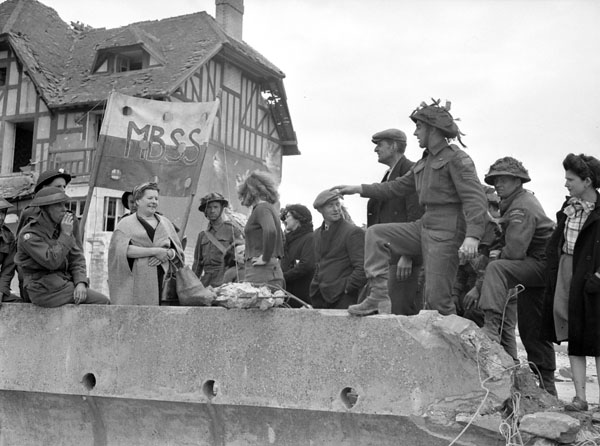
ABOVE PHOTO: Infantrymen of Le Régiment de la Chaudière talking with French civilians, Bernières-sur-Mer, France, 6 June 1944. The house that became known as “Canada House” is seen in the background. CREDIT: Library & Archives Canada, PA-132463, Photographer: Dubervill, Frank L.
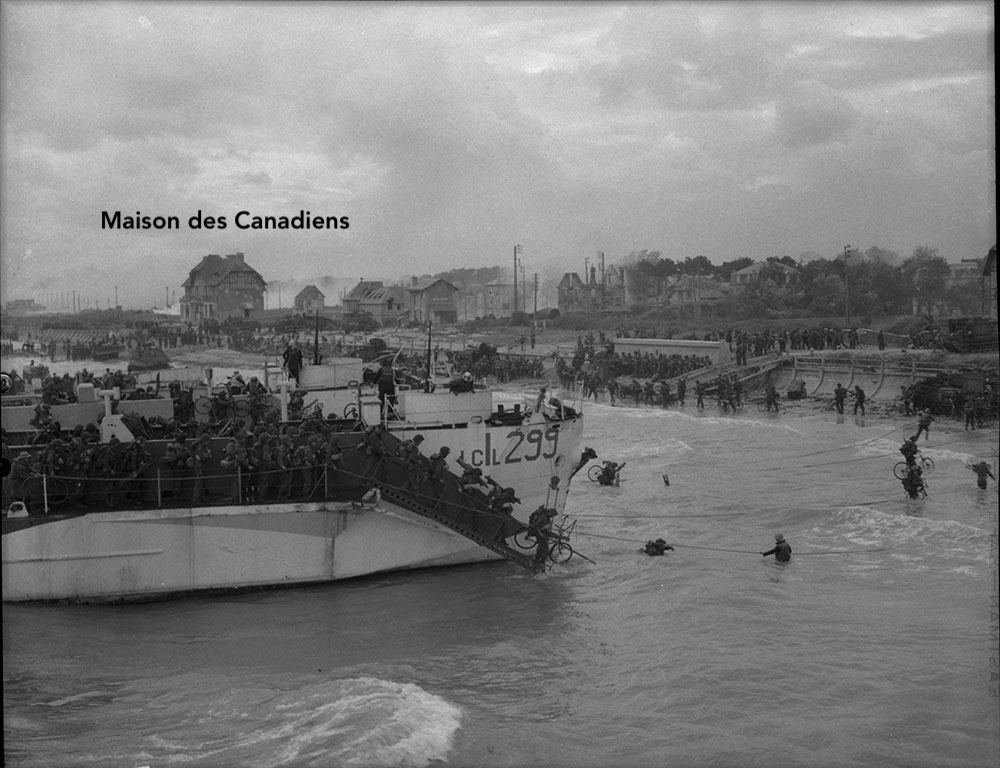
ABOVE PHOTO: Lt. Gilbert Milne’s negative 2175 annotated to show how close he landed to la Maison des Canadiens where Sgt Bill Grant landed earlier in the morning. LCI(115) is just behind LCI(L) 299 seen in the foreground. LAC PA137843.
The “pat on the back” (see image below), happens in the last three seconds of one 100-foot roll of film. That roll is just one of three successfully recovered from landing craft that arrived in front of a cottage known as “Les Hirondelles,” which still exists not far from Saint-Aubin-sur-Mer.
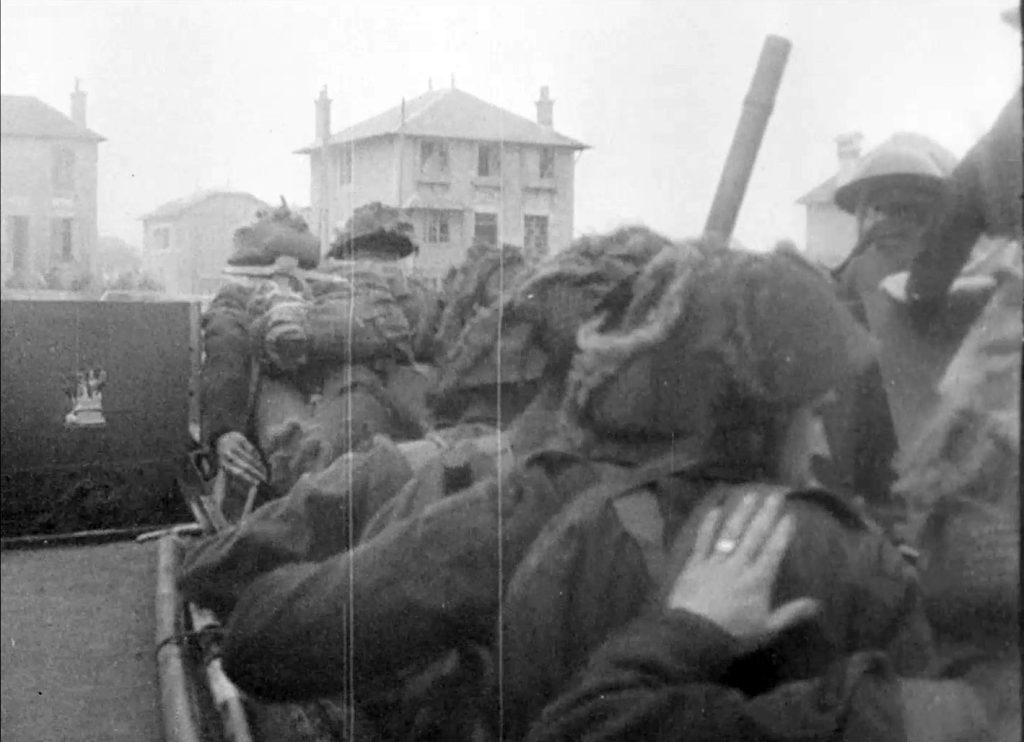
June 6th, landing day footage from, "ROLL 27 - Special Installation, OSS-USN - ARMISTEAD". Screenshot credit: Canadian Army Newsreel Issue No. 33, Crusade for Liberation!, Library & Archives Canada.
These famous three rolls, (ROLLS, 9 / 26 / 27 ), came from three of six Landing Craft, Assault (LCAs) that had automatic cameras affixed to them. The commander of each LCA was instructed to start their camera with an electric switch just before landing. All six LCAs used the HMS Brigadier, a Channel ferry requisitioned by the Royal Navy, as their mothership. These facts revealed by Mr. Hogan could lead us, in the near future, to identify the people we see in the footage. Being able to match these faces to individuals with their own stories makes the history real in a way no abstract textbook can.
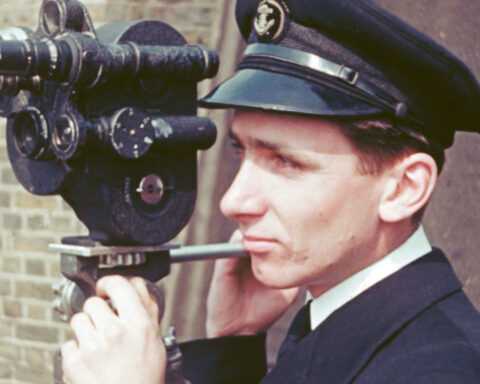
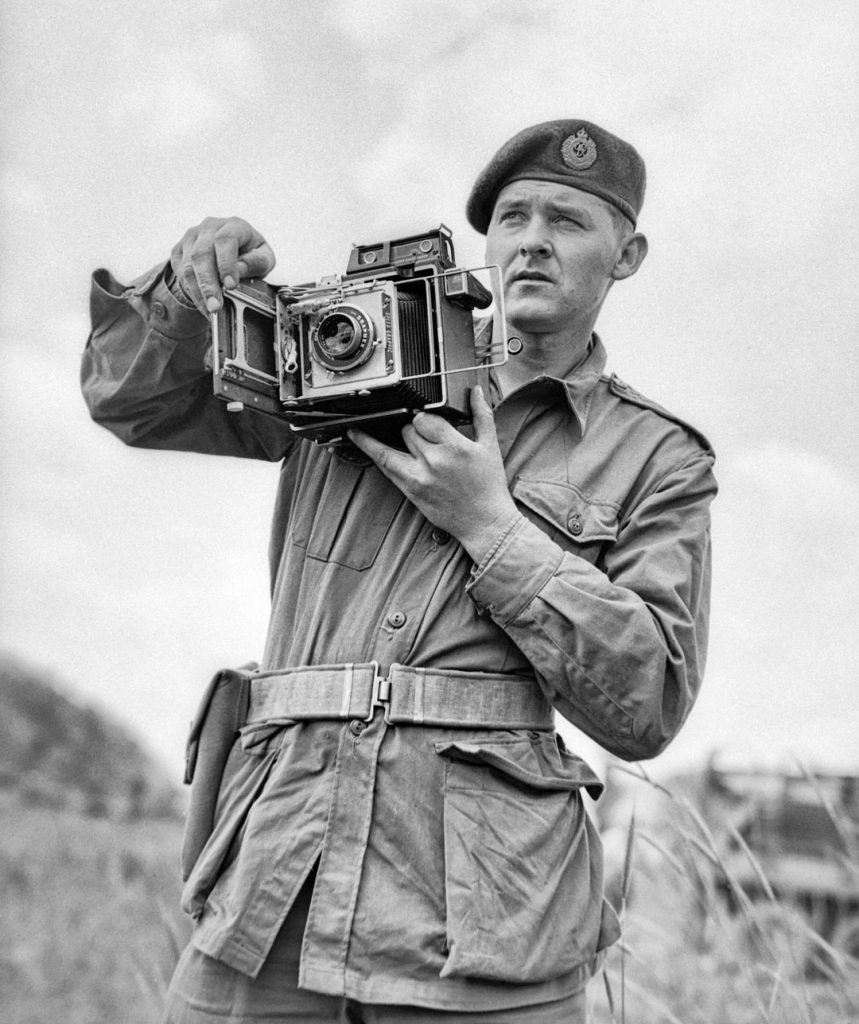
Footage shot by cine-cameraman Sgt. Bill Grant covers a different perspective of the Canadian D-Day story. Sgt. Grant and photographer Lt. Frank Duberville travelled across the Channel on a Landing Craft, Tank (LCT) with the 14th Field Regiment, Royal Canadian Artillery. Today, we can identify several of the soldiers and civilians gathered around La Maison des Canadiens. Their stories illustrate the reality of survival, as well as the tragic fates of those killed. Representing the civilians is Jacques Martin, who was evading forced labour for the Germans and whose house was burned down during the naval bombardment. Others seen in uniform include Sergeant Rosaire Gagnon, who persuaded field security to release Jacques Martin and his neighbours from custody near the railway station. Gagnon was tragically killed in action soon after in the town of Rots.
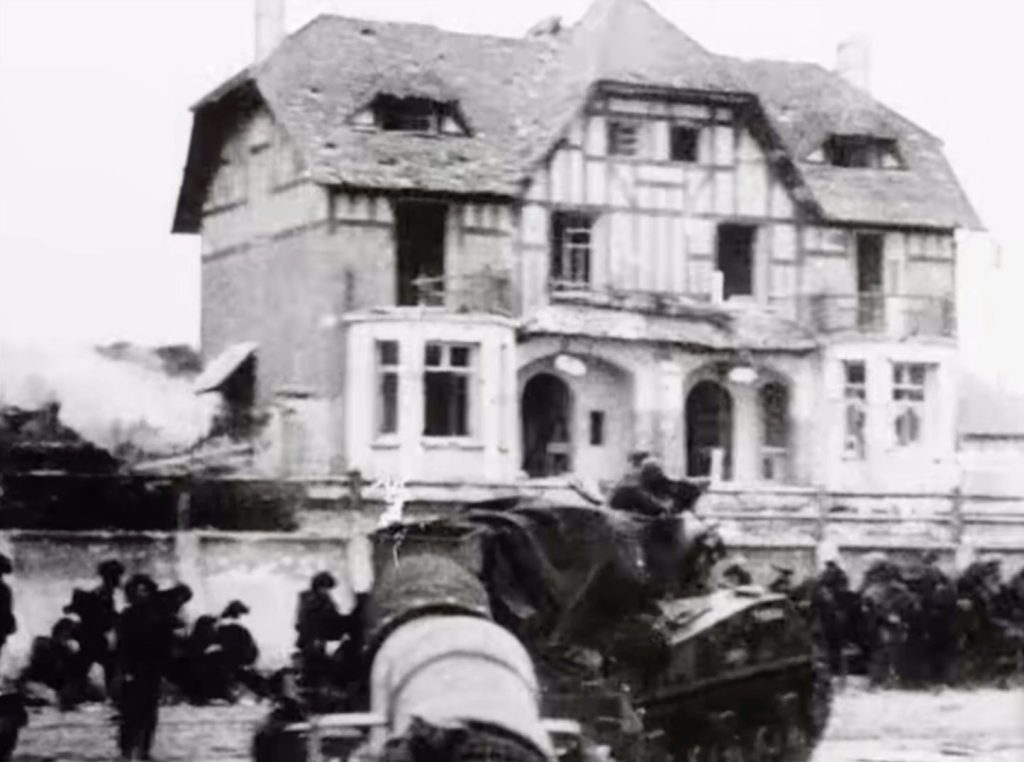
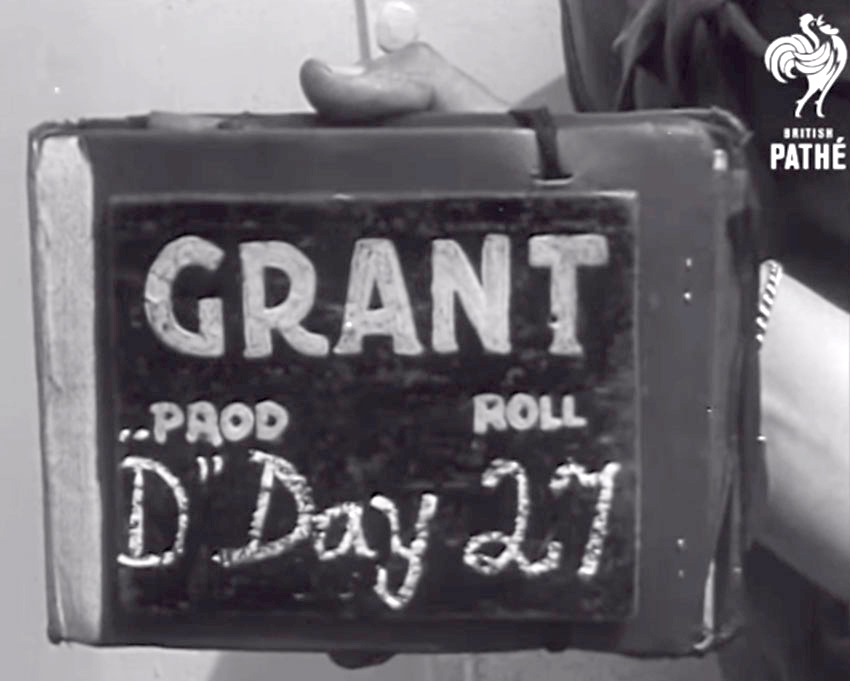
Sgt. Bill Grant: "OFF COAST OF FRANCE - "D" DAY. ROLL 27: SHOT 4: "Landing the SPs. Note concentration already on shore. ~40ft." Screen shot taken from, Canadian Army Newsreel Issue No. 33, Crusade for Liberation.

* Coincidentally, both Canadian, Sgt. Grant and, American Lt. Armistead film rolls were marked 'ROLL 27' on D-Day.
The famous three rolls, which include the “pat on the back,” have an origin story that sparked a bitter historical argument. The name written on the slates for each roll is “Armistead” (see image below). This refers to Lieutenant Mark Armistead, a member of the U.S. Field Photographic Unit, which was headed by Hollywood director John Ford.
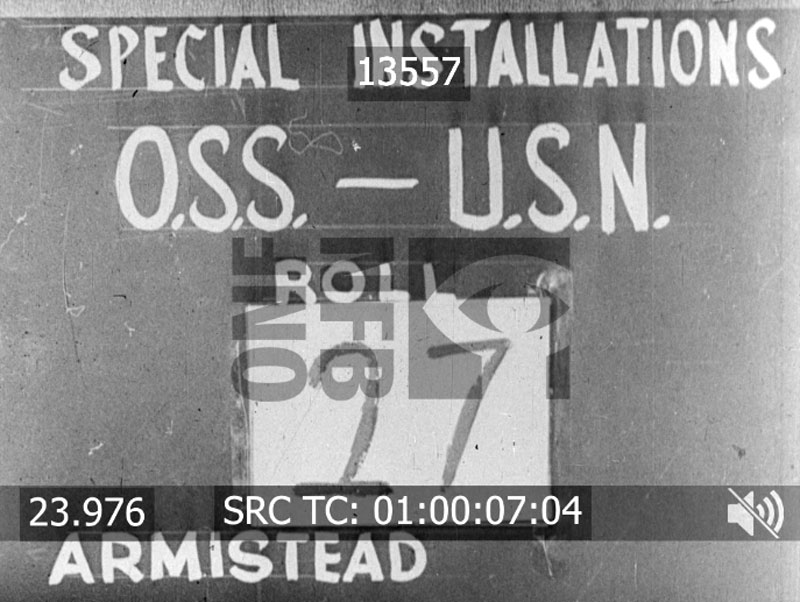
Screenshot credit: National Film Board of Canada; Invasion of France: https://archives.nfb.ca/stockshot/13557/
Years ago, Canadian writer Ted Barris, suggested that the famous three rolls were not shot by Sgt. Bill Grant, provoking an angry response from Grant’s fellow Canadian Army cameraman, Sgt. Al Grayston. Barris was not alone in his observations. We can forgive Grayston’s defensive reaction, as the confusion between these two sets of footage seems to have originated at the very beginning. In June 1944, when the footage was first reviewed by censors and newsreel companies in private London screenings, both sets were released to the public on the same day—some two days before any other footage from the beaches. Oddly, Bill Grant was evasive when questioned about the matter, possibly because he did not want to embarrass a loyal friend like Grayston.
My position is that the footage in these famous three rolls shows Canadians facing extreme danger to rid the world of a terrible curse. The evidence of this courage is minimized by only ever showing the brief “pat on the back” clip. Close analysis of the broader footage reveals details that back up the recollections of veterans who were there. The rolls show one man peeking over the armoured doors, then instinctively ducking. On the beach, we see what look like piles of laundry, which are likely the dead. We see men creeping forward and taking cover around the houses. A lick of flame erupts from one building as something explodes inside.
The fact that these cameras were installed by an American for an American film unit was simply part of an alliance joined in the grand enterprise of expanding human freedom. Our collective efforts have often been marked by failures, but we have also shared in monumental victories like D-Day.
The footage in the famous three rolls and Bill Grant’s D-Day film also share a connection with photographs taken by Lt. Gilbert Milne of the Royal Canadian Navy Volunteer Reserve. Milne’s photographs feature the landing craft surrounding him. These Landing Craft, Infantry (LCIs) featured ramps hanging from either side, which soldiers clambered down to reach the surf. His photographs often show soldiers carrying bicycles meant to speed their advance inland. Milne was aboard one of these vessels, LCI(L) 306, Serial 1708. He was well within view of those who landed in front of La Maison des Canadiens in Bernières-sur-Mer. The LCIs Milne photographed are easily identified by their hull numbers painted on each bow and a serial number placard hanging from each bridge. We can see these numbers in images taken by Lt. Frank Duberville, Sgt. Bill Grant, and radio journalist Marcel Ouimet.
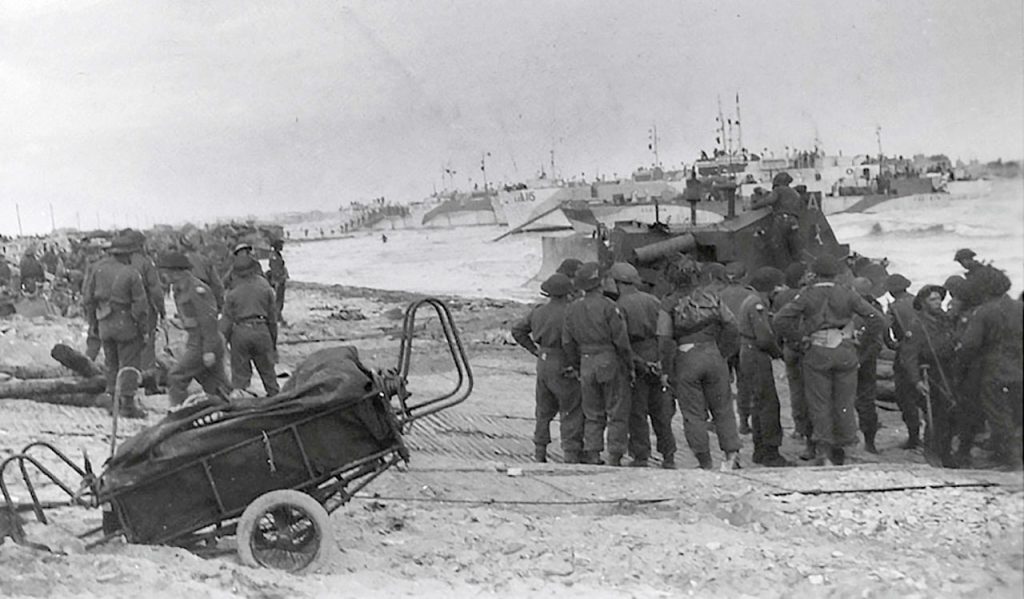
Photograph by Radio Canada journalist Marcel Ouimet in front of la Maison des Canadiens showing the Group of LCIs around Lieutenant Gilbert Milne. The first LCI(L) 115 is noted as having one automatic camera and Chief Clarence “Sam” Moran submitted the roll of film for processing.
These serial numbers are the key to locating where the men of the Field Photographic Unit, like Armistead, mounted the automatic cameras to film D-Day across the Normandy beaches. The documents discovered by Thomas Hogan identify the exact landing craft where these cameras were placed. We already had piecemeal evidence of these cameras from veteran testimonies and a single Second World War publication. However, because the Field Photographic Unit was part of the US Office of Strategic Services (OSS)—the predecessor to today’s CIA—that information has remained vague. I suspect, too, that the historical lack of clarity is down to the sheer excitement, complexity, and speed with which all footage was being rushed to the public in June 1944.
My personal moment of shock upon reading Thomas Hogan’s work was recognizing the names of the landing craft on which the cameras were mounted, and learning that some of that footage was successfully retrieved and sent for processing. Among the landing craft identified as having automatic cameras were two LCTs that landed right next to Sgt. Bill Grant, and almost every LCI surrounding Gilbert Milne’s position—including his own, LCI(L) 306. In fact, one of Milne’s photographs of his own LCI shows an object highly resembling the documented cameras, mounted to the port side of the bridge exactly where you would expect it to be.
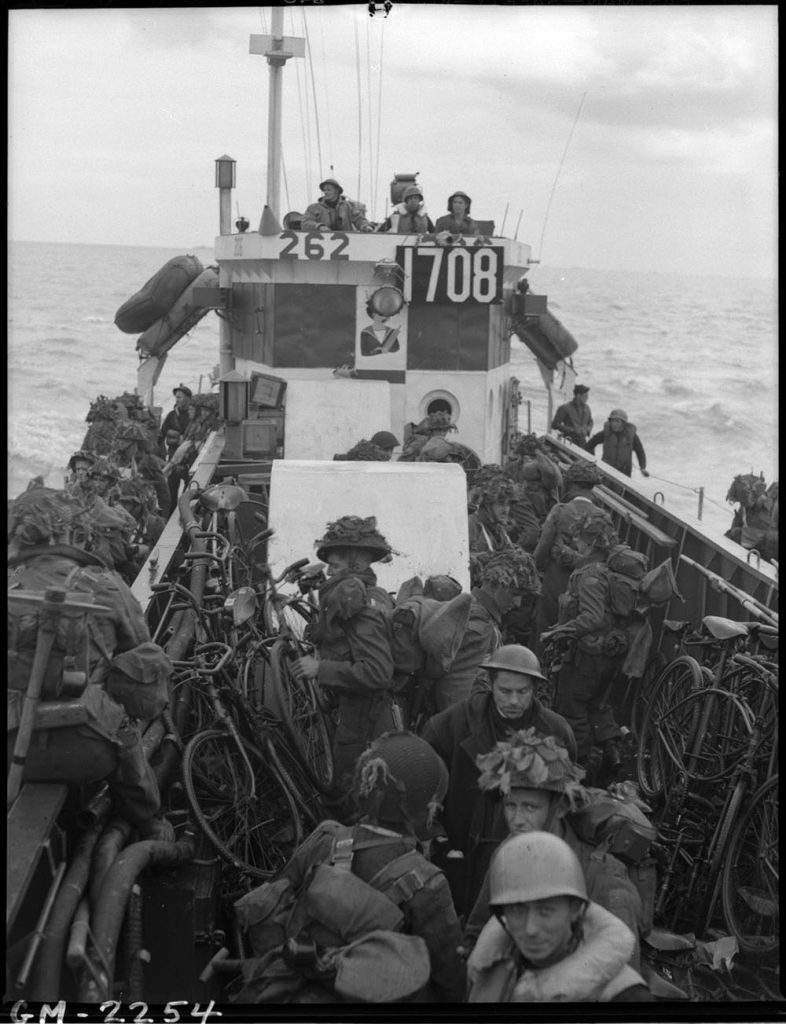
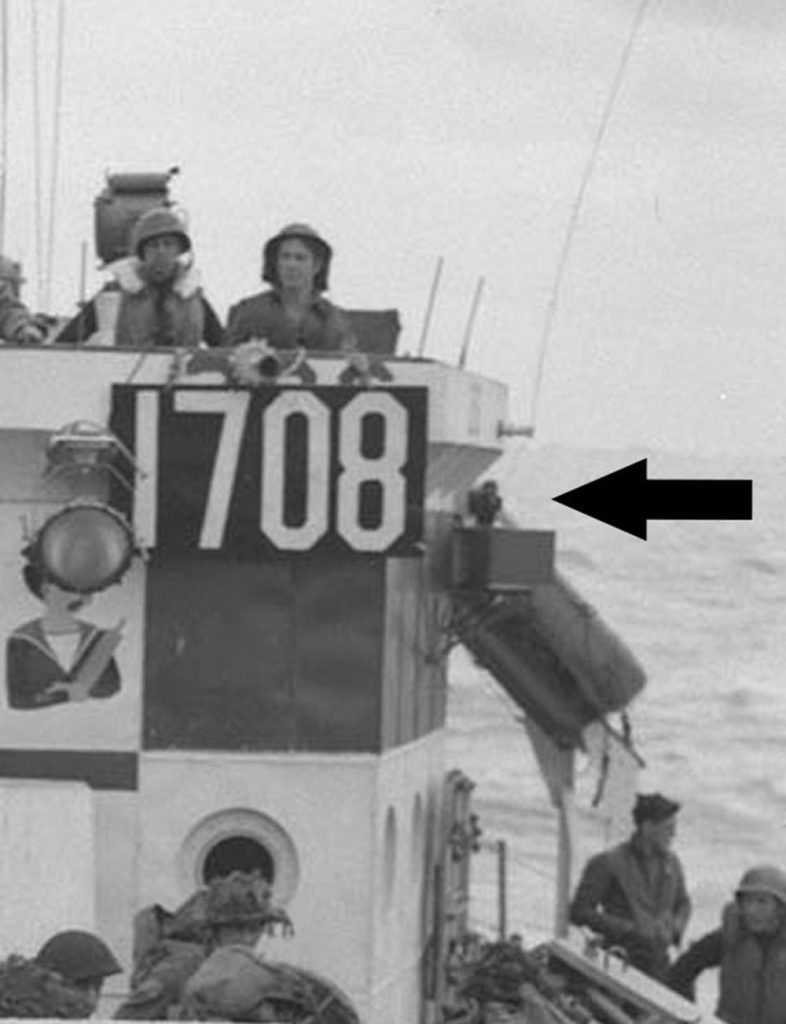
ABOVE IMAGE LEFT: Canadian troops aboard LC(I)L 306 of the 262nd Flotilla, R.C.N., en route to France. CREDIT: Photographer: Milne, Gilbert Alexander, Library & Archives Canada, NEG 2254, PA-132930. ABOVE IMAGE RIGHT ARROW: Position of Bell & Howell Eyemo.
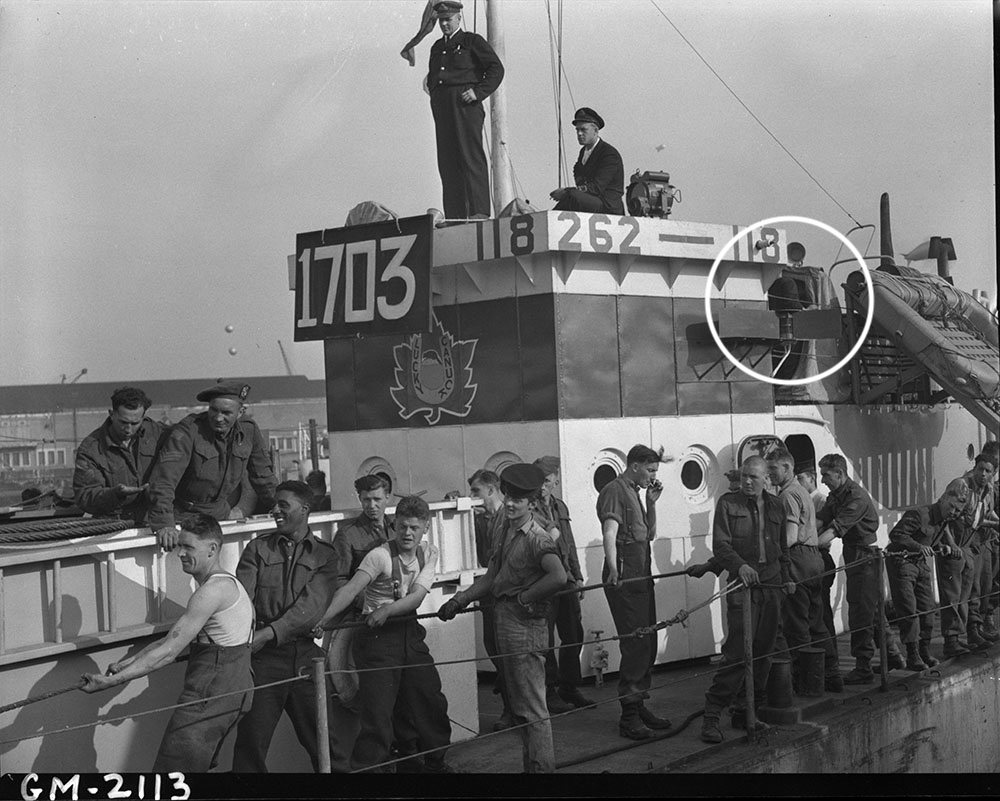
Gilbert Milne’s negative 2113 showing loading of LCI(L) 118 at Southampton. This LCI is listed as having an automatic camera. Circled object identified as an automatic camera wrapped in canvas. A tug on the rope around it would uncover the camera. The roll of film from this camera was submitted for processing.
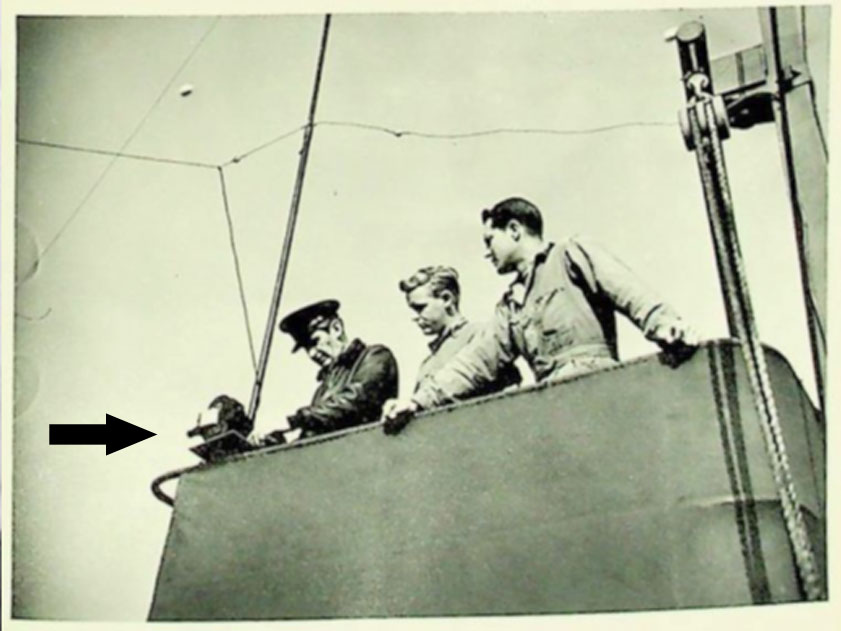
From Thomas Hogan: Ben, you have done it. You have found images of a camera in operational use - covered and uncovered. Thank you for that. I also like your additional observations and analysis. Here [is] an OSS installation photo. Size and shape match.
The available research documents do not explicitly state that this specific camera successfully captured footage. However, three rolls from the LCIs positioned right next to Milne’s were submitted for processing. One can only speculate as to why this footage has never been seen by the public. Was it considered too low-quality? Was it censored? There is no definitive evidence yet to tell us why, but we now have enough proof to believe these three unseen rolls may still exist. Mr. Hogan’s work demonstrates that, even 82 years later, the full story of D-Day has yet to be told.
© Ben Moogk 2026
Acknowledgements - Special thanks to Thomas Hogan, who was kind enough to share his groundbreaking research on the use of fixed cameras on British and Canadian vessels, and to Ben Moogk, who carefully analyzed the research to assemble this concise and well-cited post.
Postscript: The Document Evidence
Contributed by Dale Gervais
The tangible proof of this Allied technological sharing is preserved in official wartime correspondence. This rare document was preserved and passed forward by CFPU veteran, and friend, Sgt. Norman Quick. An experienced combat cine-cameraman who famously documented the brutal fighting in the Italian theatre—including the Battle of Ortona—Sgt. Quick’s keen understanding of his unit’s historical importance ensured these records survived.
The paper itself is a top-secret pre-invasion staff memorandum authored by Lt-Col R.S. Malone, Canadian Assistant Director of Public Relations (ADPR), HQ 21 Army Group. Sent strictly one month and four days prior to D-Day, it outlines the exact automated camera negotiations that Thomas Hogan’s research would later uncover in Washington.
Classification: SECRET

Canadian Public Relations Services, HQ No. 3 Public Relations Group, HQ 21 Army Group. Date: 2 May 1944.

From HQ 21 Army Group to DDPR at CMHQ (London), for forwarding to PR-NDHQ (Ottawa).

Subject: No 2 P.R. Liaison Letter (21 Army Group)

ITEM 8: MOVIES

The Americans have some 25 special movie cameras. They are fixed, sealed propositions, not requiring an operator. They can be fixed on the front of a landing barge or a leading tank and all that is required is a button to be pushed. The film runs through and is later salvaged. By this method there is the odd chance of picking up a very valuable shot or two. The American PR Officer has indicated that he may let me have 7 or 8 of these and I will certainly grab them if they are offered. As to who gets the first movies out, is purely a matter of chance, of getting the lucky breaks and who shows the most initiative. They will be Cdn film, I hope. The Americans also hope to use "facimilie" for radio transmission of still photos. This is not definite yet. Undoubtedly if we make good newsy Canadian prints available to them we should get an American play as we did sometimes from Algiers.
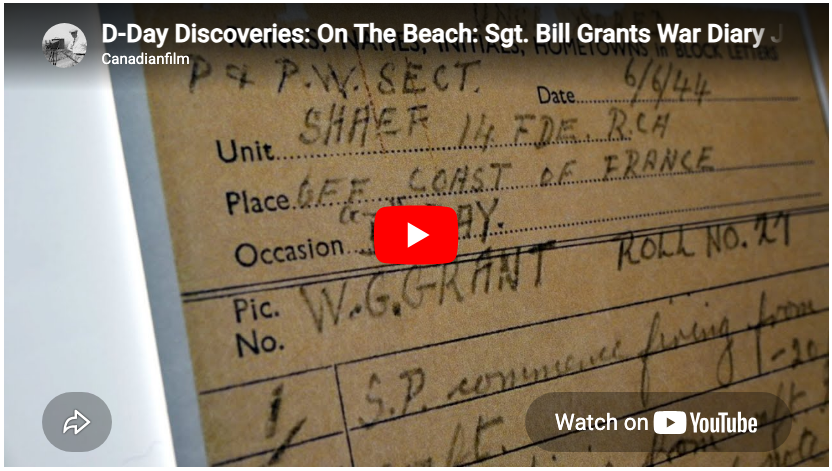
Please be sure to watch the video, D-Day Discoveries: War Diary Notes of Sgt. Bill Grant, June 6th, 1944;





Hi Ben,
A fine article, well done and congratulations on finding other ‘fixed’ cameras on Canadian D-Day crafts destined for Juno beach.
For those wishing to learn more see the thread started by Tom Hogan on the WW2Talk thread:
https://ww2talk.com/index.php?threads/the-story-of-the-juno-beach-d-day-footage.107405/
My take on the fixed LCA cameras that captured North Shore (NB) Regt. men arriving at St. Aubin-sur-Mer (22 mbs).
https://icedrive.net/s/wRTyZAWGASXgXyh7h3X36gAg5a3Z
Regards … Chuck